“Why did you become a journalist?”
I’ve been asked this questions several times. Usually I would just smile and refute: “Why not?”
Why Journalism
Four years ago, I had a hard time explaining to my peers the reason I had decided to abandon a seemingly brighter career in engineering to study journalism, too.
The most common reaction I received when I told my friends I wanted to become a reporter was: “But why, you scored 5As in STPM?!” They only stopped short of saying out loud: “Are you mad?!”
Fortunately, my family and best friends were supportive of my decision.
At that time, I didn’t know public confidence in the media was at its all-time low. I didn’t know how oppressive an environment the media was, and still is, operating in. I didn’t know the print and broadcast media were owned by or linked to Barisan Nasional. I didn’t know about the Printing Presses and Publications Act, the Sedition Act, or the Communications and Multimedia Act. I didn’t even read the newspapers every day.
I admit, I was an apathetic and naive youth.
I decided to study journalism because I wanted to become a writer, that was all.
And I thought being able to meet all sorts of people – politicians, corporate people, artists etc – on the job was cool.
But buried deep down, which I’ve only dare mentioned to a few, is that, I thought it would be awesome to become an investigative journalist – to reveal instances of injustice, uncover governments’ wrongdoings and corporations’ abuses, speaking up for the marginalised and most importantly, standing up for what’s right.
Oh yes, I was an idealist, and still is.
Political Awakening
I wasn’t interested in politics.
During my undergraduate years, I had to choose between a minor in political science or advertising so I chose the lesser of the two evils.
That was when I first received my political education – about democracy, human rights and different political systems worldwide.
Then the 2008 political tsunami happened.
I was in awe and started to take an active interest in Malaysian politics. “We’re living in exciting times,” people were whispering to each other.
Hope was in the air.
I remember thinking: I wished I was already a journalist then. I wished I had the chance to cover the historic elections and witness history first-hand as it unfolds.
A Journalist now, so?
It’s been three years since 2008. I graduated in May 2010, worked at online news site The Nut Graph for three months before it scaled down its operations, and joined a new community paper called Selangor Times in Nov 2010.
It’s been a humbling journey.
My university education and The Nut Graph exposed me to national politics, and I’m learning about community issues and how local politics work now at Selangor Times.
“Why do I want to become a journalist?”
The question still pops up in my mind from time to time, especially at times when being a journalist becomes merely that – a job.
(to be continued...)
Sunday, April 17, 2011

Wednesday, September 29, 2010
Baby turtles
Eight o’clock. We knew turtle hatchlings from nest 585 were very likely to emerge tonight after a check on the nest today so we took a mat, sat next to the nest, and waited.
Other volunteers were sitting at the centre of Chagar Hutang beach, which overlooked the entire bay, waiting for mother turtle to come ashore to nest. Located at the northern part of Redang Island, Chagar Hutang is a nesting site for green and hawksbill turtles. Torchlight was prohibited in case it discouraged mother turtles from coming ashore.
Still, the four of us could see each other’s silhouette clearly with a half moon up. I cleared all the broken branches and leaves surrounding the nest so we would know for sure the black spot on the sand was a hatchling’s head when it emerged.
Nine forty. I spotted a small moving black spot at the centre of the nest.
“Look!” I whispered. The rest leaned forward. We all held our breath in anticipation.
Something was crawling out. A few seconds later, it was out. We could recognise the shape of the baby turtle with its tiny shell and flippers.
Once it was out, it crawled forward with a burst of speed. There was a small slope immediately in front of its nest and “swoosh”, the little one went sliding down the slope. Unperturbed, the baby turtle continued to push forward towards the sea. One of us went to alert the other volunteers.
Back at the nest, more baby turtles were emerging from the nest. Ten, twenty, thirty…I lost count. The hatchlings marched towards the sea in a flurry under the moonlight.
A few got lost in the bushes and a volunteer used his flashlight to guide them out. They always follow the light. It was not uncommon to find them crawling into the kitchen when someone forgot to switch the light off.
Ten to 15 minutes later, the last hatchling was out. We followed the little fellow as it scrambled forward to catch up with its siblings. Ocean waves rushed up to greet it and a few seconds later, it was swept into the open sea.
(Marine biologists estimate that only one out of 1,000 hatchlings will survive the rough sea and human threats to reach maturity.)
Tuesday, July 20, 2010
The plastic menace
Originally published at The Nut Graph http://www.thenutgraph.com/the-plastic-menace/

“IT’s not sexy, that’s why nobody cares,” a friend comments on why few Malaysians are concerned about the problem of plastic waste even though it threatens the environment that sustains us. “It’s sexier to talk about renewable energy and green buildings than how we handle our trash,” the friend adds.
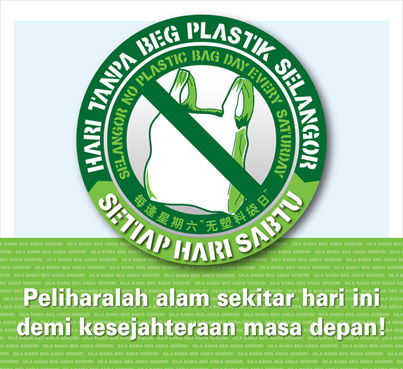
That is until some of our state and local governments took the initiative to launch No Plastic Bag Day campaigns. Penang was the first to launch the campaign in July 2009. Those without reusable bags have to pay 20 sen for a plastic bag when they shop on Mondays. In January 2010, the campaign was extended to include Tuesdays and Wednesdays. At the same time, Selangor launched its own No Plastic Bag Day campaign on Saturdays. Subsequently, the Miri and Sibu municipal councils in Sarawak, as well as Kota Kinabalu city hall and six other districts in Sabah announced similar campaigns.
How effective are these campaigns? Can they really help save the planet? And what can be done to make these campaigns more popular?
Campaigns’ effectiveness
The idea of banning plastic bags to reduce its use is not new. In 2002, Ireland imposed a 15 euro cent tax on plastic bags, and its use dropped over 90% within five months. In the same year, Bangladesh banned polyethylene bags in Dhaka as the bags were choking the drainage system and causing floods in the capital.
China banned plastic bags in 2008. A year later, it was reported that the country saved the equivalent of 1.6 million tonnes of oil and 40 billion bags. Other countries that have introduced additional charges or tax on plastic bags include Rwanda, Eritrea and Switzerland.
In Selangor, the use of plastic bags was reduced by five million in the first four months of its campaign. In Penang, the amount was one million bags over the same period.
(Pic by roberto / sxc.hu)
 Despite such reductions in plastic bag use, Ireland’s scheme has been criticised for triggering a 400% increase in the purchase of bin liners and greater reliance on paper bags. Contrary to the popular belief that paper bags are more eco-friendly, they actually require more energy to manufacture and cause more pollution during production. This probably explains why Penang and Selangor did not compel or encourage retailers to replace plastic with paper bags.
Convincing the public
Asking consumers to sacrifice requires some doing, especially when Malaysians are so used to free plastic bags that some consumers mistake it as a “right”. Some consumer associations, for example, claimed that the 20 sen charge was decided without their consultation and was therefore unfair.
Perhaps as a public relations measure to help consumers make the switch, Penang Chief Minister Lim Guan Eng announced that the state would use the funds collected from the plastic bag charges to eradicate hardcore poverty.
In Selangor, participating retailers are required to use the funds to conduct corporate social responsibility programmes. The Selangor government encourages these retailers to conduct programmes relating to the environment.
Perhaps one other way to compel consumers to change their lifestyle is to lead them to the Pacific Garbage Patch that stretches several hundred miles in the Pacific Ocean. The Pacific Garbage Patch is the largest of five plastic garbage patches in our oceans. For now, there is no way to clean up these garbage patches, scientists say.
As a result of our consumption and disposal of plastic, scientists estimate there are six times more plastic than plankton in the “continent”. Trapped by circulating ocean currents, the plastic we throw away are choking fishes and seabirds to death as the marine animals mistake them for food. Every year, more than 100,000 marine animals such as dolphins, whales and sea turtles are killed because of plastic bags.

If we don’t care about marine life, here’s another thought that should give us pause. Plastics absorb pollutants like polychlorinated biphenyls, otherwise known as cancer-causing PCBs, and pesticides.
“These particles are ingested by marine life and pass into our food chain. We all do it: we throw this stuff, this packaging, what I call dumb plastic, into the bin, and we think it has gone. But it comes back to us one way or another. Some of it ends up on our dinner plates,” British adventurer and environmentalist David de Rothschild tells The Guardian.
In 2009, Rothschild sailed to the patch in a vessel made entirely of plastics called Plastiki. The billionaire banking heir has definitely found a way to make the issue of plastic waste seem sexier.
Considering some of the gruesome facts surrounding plastic bags pollution, 20 sen per bag is a really small price to pay.
Other solutions
The Malaysian Plastic Manufacturers Association has proposed to the Penang government to give out free oxo-biodegradable plastic bags so that consumers can still enjoy free plastic bags on campaign days.
However, oxo-biodegradable plastic bags are not 100% degradable. They can only degrade in the presence of sunlight and oxygen. Those that end up in landfills would not degrade at all. Therefore, reusable bags are still the best option.
For certain, most of our plastic waste comes from packaging that is often unnecessary. Malaysian consumers cannot hope to rely solely on governments to resolve our plastic waste problem. After all, in a marketplace driven by profit, consumer demand and lifestyle are often much more powerful than government regulations.
As Leo Hickman writes in The Guardian on 11 Aug 2009: “[Plastic bags] are the ultimate symbol of our throwaway culture.”
No Plastic Bag Day campaigns are merely the first step towards stimulating the public to rethink the impact of our “use and throw” habit on the very environment that sustains us.
Gan Pei Ling believes reusable bags are the best solution to our plastic bag dilemma, but would like to remind readers to wash their reusable bags frequently in the interest of hygiene.
“IT’s not sexy, that’s why nobody cares,” a friend comments on why few Malaysians are concerned about the problem of plastic waste even though it threatens the environment that sustains us. “It’s sexier to talk about renewable energy and green buildings than how we handle our trash,” the friend adds.
That is until some of our state and local governments took the initiative to launch No Plastic Bag Day campaigns. Penang was the first to launch the campaign in July 2009. Those without reusable bags have to pay 20 sen for a plastic bag when they shop on Mondays. In January 2010, the campaign was extended to include Tuesdays and Wednesdays. At the same time, Selangor launched its own No Plastic Bag Day campaign on Saturdays. Subsequently, the Miri and Sibu municipal councils in Sarawak, as well as Kota Kinabalu city hall and six other districts in Sabah announced similar campaigns.
How effective are these campaigns? Can they really help save the planet? And what can be done to make these campaigns more popular?
Campaigns’ effectiveness
The idea of banning plastic bags to reduce its use is not new. In 2002, Ireland imposed a 15 euro cent tax on plastic bags, and its use dropped over 90% within five months. In the same year, Bangladesh banned polyethylene bags in Dhaka as the bags were choking the drainage system and causing floods in the capital.
China banned plastic bags in 2008. A year later, it was reported that the country saved the equivalent of 1.6 million tonnes of oil and 40 billion bags. Other countries that have introduced additional charges or tax on plastic bags include Rwanda, Eritrea and Switzerland.
In Selangor, the use of plastic bags was reduced by five million in the first four months of its campaign. In Penang, the amount was one million bags over the same period.
(Pic by roberto / sxc.hu)

Convincing the public
Asking consumers to sacrifice requires some doing, especially when Malaysians are so used to free plastic bags that some consumers mistake it as a “right”. Some consumer associations, for example, claimed that the 20 sen charge was decided without their consultation and was therefore unfair.
Perhaps as a public relations measure to help consumers make the switch, Penang Chief Minister Lim Guan Eng announced that the state would use the funds collected from the plastic bag charges to eradicate hardcore poverty.
In Selangor, participating retailers are required to use the funds to conduct corporate social responsibility programmes. The Selangor government encourages these retailers to conduct programmes relating to the environment.
Perhaps one other way to compel consumers to change their lifestyle is to lead them to the Pacific Garbage Patch that stretches several hundred miles in the Pacific Ocean. The Pacific Garbage Patch is the largest of five plastic garbage patches in our oceans. For now, there is no way to clean up these garbage patches, scientists say.
As a result of our consumption and disposal of plastic, scientists estimate there are six times more plastic than plankton in the “continent”. Trapped by circulating ocean currents, the plastic we throw away are choking fishes and seabirds to death as the marine animals mistake them for food. Every year, more than 100,000 marine animals such as dolphins, whales and sea turtles are killed because of plastic bags.

Plastic waste found on the beach in Kuantan (Pic by Carolyn Lau and Ng Sek San)
If we don’t care about marine life, here’s another thought that should give us pause. Plastics absorb pollutants like polychlorinated biphenyls, otherwise known as cancer-causing PCBs, and pesticides.
“These particles are ingested by marine life and pass into our food chain. We all do it: we throw this stuff, this packaging, what I call dumb plastic, into the bin, and we think it has gone. But it comes back to us one way or another. Some of it ends up on our dinner plates,” British adventurer and environmentalist David de Rothschild tells The Guardian.
In 2009, Rothschild sailed to the patch in a vessel made entirely of plastics called Plastiki. The billionaire banking heir has definitely found a way to make the issue of plastic waste seem sexier.
Considering some of the gruesome facts surrounding plastic bags pollution, 20 sen per bag is a really small price to pay.
Other solutions
The Malaysian Plastic Manufacturers Association has proposed to the Penang government to give out free oxo-biodegradable plastic bags so that consumers can still enjoy free plastic bags on campaign days.
However, oxo-biodegradable plastic bags are not 100% degradable. They can only degrade in the presence of sunlight and oxygen. Those that end up in landfills would not degrade at all. Therefore, reusable bags are still the best option.
For certain, most of our plastic waste comes from packaging that is often unnecessary. Malaysian consumers cannot hope to rely solely on governments to resolve our plastic waste problem. After all, in a marketplace driven by profit, consumer demand and lifestyle are often much more powerful than government regulations.
As Leo Hickman writes in The Guardian on 11 Aug 2009: “[Plastic bags] are the ultimate symbol of our throwaway culture.”
No Plastic Bag Day campaigns are merely the first step towards stimulating the public to rethink the impact of our “use and throw” habit on the very environment that sustains us.
Gan Pei Ling believes reusable bags are the best solution to our plastic bag dilemma, but would like to remind readers to wash their reusable bags frequently in the interest of hygiene.


